.png)
How Texas Food Entrepreneurs Can Capitalize on 2026's Biggest Food Trends
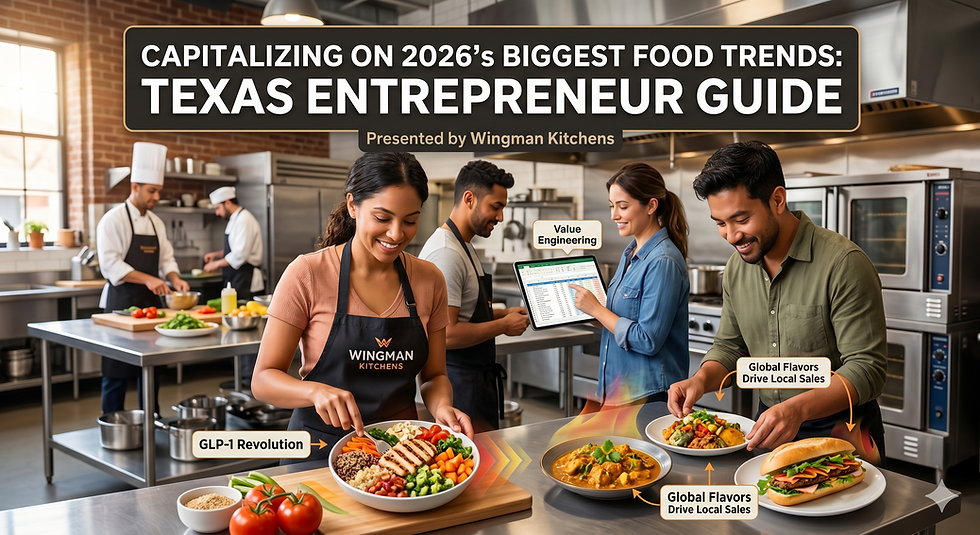
The food industry is shifting fast, and 2026 brings both unique challenges and massive opportunities for food entrepreneurs across Texas. Whether you run a meal prep business in Austin, cater events in Houston, or operate a food truck in San Antonio, understanding these trends can help you stay ahead of the competition and grow your bottom line.
At Wingman Kitchens, we see hundreds of food entrepreneurs walk through our doors each year. Here are the major trends they are leveraging to build successful businesses today.
1. The GLP-1 Revolution: Smaller Portions, Bigger Protein
One of the most significant shifts in consumer behavior comes from the rise of GLP-1 weight management medications. With 23% of U.S. households now using these treatments, food businesses must adapt their offerings to fit a changing appetite.
What does this mean for your menu? Consumers are actively seeking high-protein snacks and fiber-rich foods that keep them satisfied with smaller portions. Nearly half of users report cutting down on portion sizes, while simultaneously demanding more nutrient density per bite.
The Opportunity: Smart food entrepreneurs are creating GLP-1-friendly items that don't sacrifice flavor. Think protein-packed grain bowls, fiber-dense smoothies, and premium, portion-controlled comfort foods that deliver satisfaction without the excess calories.
2. Global Flavors Drive Local Sales
Texas food lovers have notoriously adventurous palates, and regional Indian cuisines, Thai, Filipino, and Vietnamese flavors are gaining serious traction. These are no longer niche trends—they are mainstream expectations.
The late-night dining and limited-service segments are particularly hot. Food entrepreneurs who combine bold, global profiles with convenient availability are capturing a massive share of the local market.
Meal Prep Businesses: Introduce a weekly rotating Vietnamese- or Filipino-inspired menu.
Caterers: Develop modern Thai-fusion small plate and appetizer packages.
Food Trucks: Experiment with regional Indian street food formats that travel well and are easy to eat on the go.
3. Navigating Economic Headwinds with Value Engineering
According to recent USDA forecasts, overall food prices are projected to rise 3.4%, with away-from-home dining seeing a 3.5% increase. Coupled with ongoing labor shortages, operational costs remain a hurdle.
Successful food entrepreneurs are responding with strategic value engineering. This doesn’t mean cutting corners; it means optimizing your menu for profitability while maintaining high quality:
Cross-Utilization: Focus on versatile ingredients that work across multiple menu applications.
Waste Reduction: Streamline inventory management to protect your margins.
Menu Innovation: Consider developing private-label products. Branded sauces, spice blends, or signature components add a high-margin revenue stream while building brand recognition.
The Bottom Line for Texas Food Entrepreneurs
Despite economic shifts, confidence in the food sector remains incredibly resilient. The entrepreneurs who will thrive are those who adapt quickly to changing consumer health demands, embrace global flavor profiles, and operate efficiently.
At Wingman Kitchens, we provide the licensed, fully equipped commercial kitchen space you need to test new concepts, scale production, and grow. With 5 convenient locations across Houston, Austin, San Antonio, and Missouri City, our flexible rental options let you eliminate heavy overhead and focus on what matters most: creating food that customers love.
Ready to capitalize on these trends? Contact us today to tour a facility and see how Wingman Kitchens can help your food business take flight.
Sources


Comments